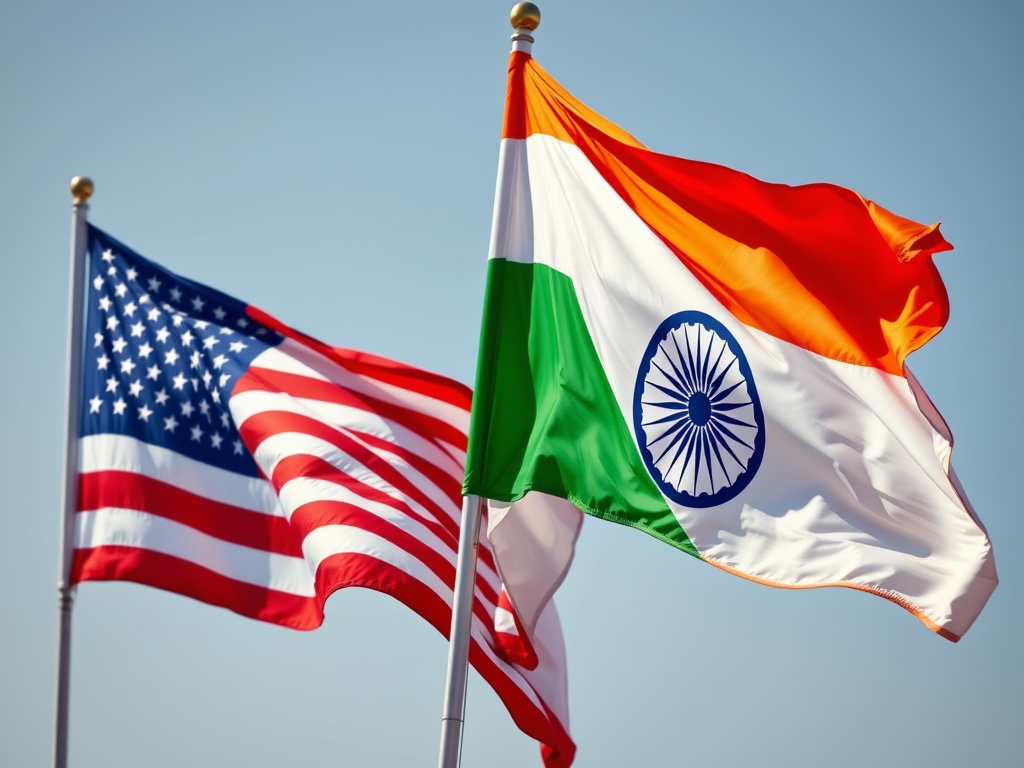
India and the United States: A Strategic Partnership in the 21st Century
Introduction
The relationship between India and the United States has undergone a profound transformation over the last few decades. From Cold War estrangement to contemporary strategic partnership, the India–U.S. relationship today is one of the most significant bilateral ties in global geopolitics. The two democracies, which once operated on opposite ends of the ideological spectrum, have forged strong economic, defense, technological, and cultural bonds. With shared interests in upholding a rules-based international order, countering terrorism, ensuring stability in the Indo-Pacific, and leading technological innovation, India and the U.S. are poised to shape the future of the 21st century.
This article delves into the historical evolution, key areas of cooperation, challenges, and the growing strategic alignment between these two global powers.
Historical Context
The India–U.S. relationship was characterized by mistrust and limited engagement during the Cold War. India’s policy of non-alignment and its close ties with the Soviet Union stood in contrast to the U.S.’s position as the leader of the Western bloc. The 1971 Indo-Pakistani War and India’s nuclear test in 1974 further strained ties.
However, the post-Cold War era offered a new opportunity. The 1991 economic liberalization reforms in India opened its markets to the world, attracting U.S. investment and laying the foundation for deeper engagement. The relationship reached a new height in 2005 with the signing of the U.S.–India Civil Nuclear Agreement, which recognized India as a responsible nuclear power and helped end decades of nuclear isolation.
Strategic and Defense Cooperation
One of the cornerstones of the modern India–U.S. relationship is defense and strategic cooperation. India is now designated as a Major Defense Partner of the United States—a status that facilitates the sharing of advanced defense technologies and joint military exercises.
Key developments include:
- Foundational Agreements: India has signed key defense agreements with the U.S., including:
- LEMOA (Logistics Exchange Memorandum of Agreement) – enabling mutual logistical support.
- COMCASA (Communications Compatibility and Security Agreement) – allowing encrypted communication systems.
- BECA (Basic Exchange and Cooperation Agreement) – for geospatial intelligence sharing.
- Military Exercises: Joint exercises such as Yudh Abhyas, Malabar (naval exercises with Japan and Australia), and Tiger Triumph enhance interoperability between the Indian and U.S. armed forces.
- Arms Trade: India has increasingly procured high-tech American defense equipment, including P-8I maritime surveillance aircraft, Apache and Chinook helicopters, and C-17 transport aircraft.
This growing defense relationship also aligns with the shared objective of ensuring security and freedom of navigation in the Indo-Pacific region, where both countries view the rise of China with caution.
Economic and Trade Relations
India and the U.S. enjoy a robust economic relationship, with bilateral trade surpassing $190 billion in 2023, making the U.S. India’s largest trading partner.
Key Aspects:
- Investment: U.S. companies have invested billions in India’s tech, manufacturing, and renewable energy sectors, while Indian firms like Infosys, Tata, and Wipro have created tens of thousands of jobs in the U.S.
- Technology and Innovation: The digital economy, fintech, clean energy, and pharmaceuticals are emerging areas of synergy. India’s IT services exports to the U.S. support American business competitiveness, while U.S. tech firms like Google, Amazon, Microsoft, and Apple see India as a crucial market and talent pool.
- Challenges: Despite strong ties, trade relations face hurdles such as tariffs, data localization rules, intellectual property concerns, and disputes at the WTO. However, both nations have committed to resolving these issues through dialogue.
In 2023, the launch of the India–U.S. Trade Policy Forum (TPF) and Critical and Emerging Technology (iCET) initiative has reinvigorated collaboration on supply chain resilience, semiconductors, AI, and quantum computing.
People-to-People and Educational Ties
Perhaps no other dimension of the India–U.S. relationship is as vibrant and influential as the people-to-people connection.
- Indian Diaspora: The Indian-American community—numbering over 4.5 million—is one of the most educated and economically successful ethnic groups in the U.S. They play a key role in politics, business, medicine, and academia.
- Education: The U.S. remains the most popular destination for Indian students, with over 250,000 Indian students enrolled in American universities in 2024. These students contribute to innovation, research, and cross-cultural understanding.
- Science and Research: Collaborative projects between institutions like NASA and ISRO, as well as public-private research partnerships, are deepening technological cooperation.
- Culture: Bollywood, yoga, cricket diplomacy, and Indian cuisine have all enriched the American cultural landscape, fostering greater familiarity and friendship.
Geopolitical Convergence
In recent years, both India and the United States have recognized the value of a strategic partnership to uphold a multipolar, rules-based global order—particularly in light of rising tensions with authoritarian regimes.
- Indo-Pacific Strategy: India is a central pillar in the U.S.’s Indo-Pacific strategy. The U.S. supports India’s role as a net security provider in the region.
- QUAD (Quadrilateral Security Dialogue): India, the U.S., Japan, and Australia have revitalized this platform to address challenges in the Indo-Pacific, including maritime security, cyber threats, and supply chain diversification.
- Counterterrorism: Both countries collaborate on intelligence sharing and counterterrorism training, particularly after the 2008 Mumbai attacks and amid concerns over extremism in South Asia.
- China and Russia: While India maintains strategic autonomy, its discomfort with China’s aggressive posturing along the Himalayan border and its balanced stance on Russia’s war in Ukraine have highlighted the nuances in its foreign policy. The U.S. continues to respect India’s independent decision-making while encouraging stronger alignment.
Energy and Climate Cooperation
As both countries seek to transition toward cleaner energy, climate change cooperation has become a vital area.
- U.S.–India Climate and Clean Energy Agenda 2030 aims to enhance renewable energy capacity, boost electric mobility, and support carbon neutrality goals.
- Strategic Energy Partnership (SEP): This bilateral initiative spans areas such as oil and gas, renewable energy, energy efficiency, and clean technologies.
- India has also emerged as a global leader in the International Solar Alliance (ISA), an initiative backed by both nations to promote solar power in developing countries.
Challenges in the Relationship
Despite shared goals, some challenges persist:
- Human Rights and Democratic Norms: The U.S. has occasionally raised concerns over issues such as religious freedom, press freedom, and minority rights in India. India, in turn, asserts that such matters are internal and should not affect bilateral ties.
- Strategic Autonomy vs. Alliance Politics: India values its policy of non-alignment and resists formal alliances, while the U.S. often prefers more defined security partnerships.
- Trade Disputes: Issues like visa restrictions, e-commerce regulations, and agricultural imports have created friction.
- Pakistan and Regional Stability: While the U.S. has reduced its reliance on Pakistan post-Afghanistan, its historical military ties with Islamabad and continued interest in South Asian stability sometimes complicate dynamics.
Conclusion
The India–U.S. relationship has emerged as a defining partnership of the 21st century, grounded in shared democratic values, mutual strategic interests, and a common vision for global stability. As the world grapples with shifting power balances, technological disruption, and environmental challenges, the collaboration between these two nations is more crucial than ever.
Despite differences in approach and perspective, both countries recognize the benefits of their growing partnership. With careful diplomacy, continued dialogue, and mutual respect, India and the United States are well-positioned to shape a more inclusive, prosperous, and secure world.
As Prime Minister Narendra Modi once stated during a U.S. visit: “India and the United States are natural partners, bound by shared ideals and shared destinies.” That sentiment continues to resonate, as the world watches this pivotal partnership evolve.
What do you think?
What do you think about USA and India relationship