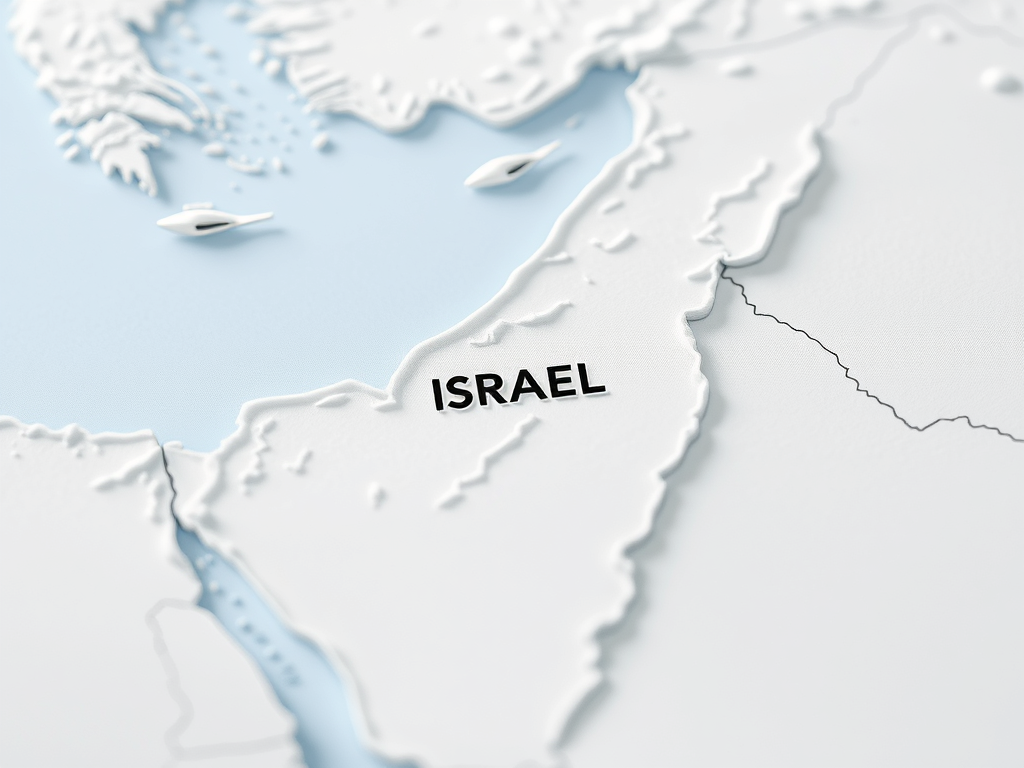
The Israel–Palestine Conflict: A Comprehensive Analysis (Updated May 2025)
Introduction
The Israel–Palestine conflict has escalated into one of the most protracted and devastating geopolitical crises of the 21st century. As of May 2025, the situation has reached unprecedented levels of violence, humanitarian suffering, and international diplomatic tension. This article provides an in-depth analysis of the current state of the conflict, examining its historical roots, recent developments, humanitarian impact, and the complex international dynamics at play.
Historical Context
The origins of the Israel–Palestine conflict trace back to the early 20th century, rooted in competing national movements and territorial disputes between Jews and Arabs in the region of historic Palestine. The establishment of the State of Israel in 1948, following the end of the British Mandate, led to the displacement of a significant number of Palestinians, an event known as the Nakba (Catastrophe). Subsequent wars, including the 1967 Six-Day War, resulted in Israel occupying the West Bank, East Jerusalem, and the Gaza Strip, territories that Palestinians claim for a future state.
Over the decades, numerous attempts at peace, including the Oslo Accords in the 1990s, have failed to resolve the core issues: borders, the status of Jerusalem, Palestinian refugees, and mutual recognition. The rise of Hamas in Gaza and the division between it and the Palestinian Authority in the West Bank have further complicated peace efforts.
Recent Developments
Escalation of Hostilities
In May 2025, Israel launched “Operation Gideon’s Chariots,” a large-scale military offensive aimed at dismantling Hamas’s military and governing infrastructure in the Gaza Strip. The operation has involved extensive airstrikes, artillery bombardments, and ground incursions, resulting in significant casualties and widespread destruction. As of May 20, over 53,000 Palestinians have been killed since the conflict’s intensification in October 2023, with the majority being civilians. The latest offensive has exacerbated the humanitarian crisis, with at least 85 Palestinians killed in a single day of airstrikes on May 20, 2025.
Humanitarian Crisis
The humanitarian situation in Gaza has reached catastrophic levels. The United Nations has warned that up to 14,000 babies could die within 48 hours if humanitarian aid does not reach them, as the Israeli blockade has severely restricted the entry of essential supplies. Despite the entry of limited aid trucks, the support remains grossly inadequate. The World Health Organization reports that 2 million Gazans are starving, and food shipments remain blocked at the Israeli border.
The World Food Programme announced that it had delivered its last remaining supplies to kitchens preparing hot meals in Gaza, which were expected to be gone within days. These kitchens had been the only consistent source of food assistance in recent weeks, although they reached only half of the population with one-quarter of their daily food requirements.
Additionally, the Gaza Media Office announced that there were over 65,000 cases of acute malnutrition in children in the Gaza Strip, a figure corroborated by international agencies reporting that 66,000 children were suffering from severe malnutrition in May 2025.
Political Dynamics
Israeli Prime Minister Benjamin Netanyahu faces increasing pressure both domestically and internationally. Allies including the U.S., U.K., France, and Canada are urging Netanyahu to cease hostilities, with threats of sanctions, suspended trade talks, and condemnation of restricted humanitarian aid. The U.K. has sanctioned settler outposts and individuals, and the U.S. administration has expressed a clear desire for the war to end. Domestically, opposition politicians have condemned Israel’s actions against civilians, sparking controversy and debate within the Israeli Knesset.
Despite these pressures, Netanyahu’s far-right coalition partners oppose further aid and may topple his government if concessions continue. The risk of losing U.S. support—a cornerstone of Israeli foreign policy—adds to Netanyahu’s dilemma. Negotiations with Hamas to secure a ceasefire and release hostages have so far failed.
International Reactions
United Nations
The United Nations has been vocal in condemning the actions of both Israel and Hamas. The UN’s humanitarian chief warned that thousands of babies in Gaza could die within 48 hours if humanitarian aid does not arrive. Despite limited aid deliveries, the support has been deemed grossly inadequate. This crisis follows the World Health Organization’s report that 2 million Gazans are starving while food shipments remain blocked.
European Union
The European Union has expressed deep concern over the escalating violence and humanitarian situation. Countries such as Spain, France, the United Kingdom, Slovenia, Poland, Belgium, and Germany have voiced their opposition to any relocation or displacement of the Palestinian population. Following the announcement of a plan for the temporary relocation of a significant portion of the Palestinian population in Gaza to Egypt, Jordan, and other countries, these nations condemned the proposal. European foreign ministers emphasized that the land of Palestinian Gazans is Gaza and rejected any external intervention forcing relocation.
United States
The United States has maintained a complex position. While the U.S. administration has expressed a desire for the war to end, it has been criticized for not exerting sufficient pressure on Israel to cease hostilities. Diplomatic efforts have continued, including high-profile communications between U.S. and international leaders, but have yet to produce meaningful results.
Other Countries
Countries across Latin America, Asia, and Africa have also weighed in. South Africa, Brazil, and Indonesia have strongly criticized Israeli military actions and called for an immediate ceasefire. Arab nations including Jordan and Egypt have expressed grave concerns about regional spillover and have continued to support ceasefire initiatives, though they remain wary of accepting mass refugee relocations.
Media and Public Opinion
Media coverage of the conflict has been intense and often polarizing. Global public opinion remains divided, with pro-Palestinian demonstrations taking place in major cities across Europe, the Americas, and the Middle East. In contrast, pro-Israel rallies have also occurred, particularly in response to rocket attacks by Hamas and concerns over Israeli civilian casualties.
Social media platforms have become key battlegrounds for public narratives, with misinformation and graphic content fueling tensions online. Activists and NGOs have struggled to navigate an information environment saturated with emotion, propaganda, and censorship.
Impact on Civilians
The human cost of the conflict cannot be overstated. Gaza’s infrastructure—already fragile before the conflict—has been devastated. Hospitals, schools, residential buildings, and refugee shelters have been destroyed or rendered inoperable. The blockade has led to a collapse in electricity, sanitation, and healthcare services. Entire families have been wiped out, and hundreds of thousands have been displaced.
Meanwhile, Israeli civilians have also suffered under rocket fire and infiltration attempts, though the Iron Dome defense system has intercepted the vast majority of attacks. Evacuations have taken place in southern Israel, and there have been casualties from both rocket strikes and clashes near border towns.
The psychological toll, particularly on children, is immense. Reports from both sides describe a generation traumatized by war, with rising cases of PTSD, depression, and anxiety disorders. Aid workers describe scenes of children digging through rubble, scavenging for food, and wandering in search of missing family members.
Ceasefire Talks and Future Prospects
Multiple rounds of ceasefire talks have taken place in Doha, Cairo, and Geneva, often mediated by Qatar, Egypt, and the United Nations. However, deep mistrust between the parties has rendered most discussions fruitless. Key sticking points include Israel’s demand for the complete disarmament of Hamas, the return of hostages, and Hamas’s insistence on ending the blockade and allowing for Gaza’s reconstruction under Palestinian governance.
Some proposals include a phased truce with international monitoring, but these remain theoretical. The question of who would govern Gaza post-conflict remains unanswered. The Palestinian Authority lacks credibility in Gaza, while Hamas refuses to cede control. A potential UN-administered interim authority has been floated, but it faces legal and logistical challenges.
Geopolitical Implications
The conflict has wide-reaching implications for the Middle East and beyond. Iran’s involvement—through funding and arming Hamas and Hezbollah—continues to draw scrutiny. Israeli strikes on targets in Syria and Lebanon risk igniting a broader regional war. Meanwhile, normalization efforts between Israel and Arab states have stalled, with some countries suspending dialogue altogether.
Turkey, which previously played a balancing role, has taken a more openly pro-Palestinian stance. Russia and China, both critical of U.S. policy in the region, have used the crisis to highlight Western inconsistency on human rights and territorial sovereignty, especially in light of ongoing conflicts in Ukraine and Taiwan.
The United States faces a credibility dilemma. Its support for Israel amid rising civilian deaths has sparked international protests and strained relationships with partners in the Global South. The broader consequence could be a shift in global alliances and increased skepticism toward Western leadership on issues of humanitarian law and conflict resolution.
Conclusion
The Israel–Palestine conflict, now deep into a renewed and devastating phase as of May 2025, stands as a harrowing indictment of global inaction, political gridlock, and failed diplomacy. Over 53,000 Palestinians have died—most of them civilians—amid relentless airstrikes, ground offensives, and humanitarian blockades. Gaza is facing an unprecedented famine, with babies and children among the most vulnerable. Despite the scale of the tragedy, ceasefire efforts have stalled, and political leadership on both sides remains entrenched in zero-sum narratives.
Israeli Prime Minister Benjamin Netanyahu faces growing internal and external pressure to end hostilities, but his far-right coalition and the security establishment show little sign of relenting. Hamas, weakened militarily but still capable of resistance, continues to reject negotiations that do not ensure significant political concessions.
What do you think?
What do you think about the Israel – Palestine conflict?
When will it end?